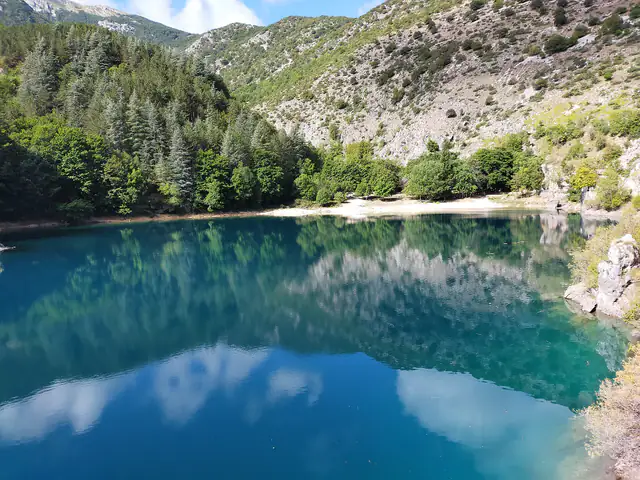
Lake San Domenico
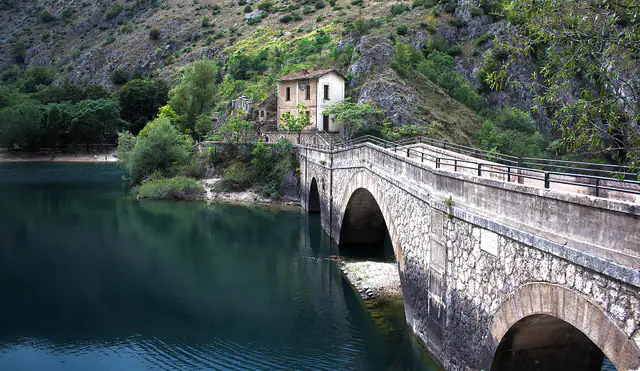
AbruzzoAn emerald-green lake tucked between rock walls, with a stone bridge crossing it and, not far away, a cave where the saint of the snakes has been v…

Original name: Eremo di San Domenico
A little stone church with a two-light portico, looking out over the green water of the lake, and behind the altar the entrance to a cave: it is the cave where, according to tradition, a Benedictine monk lived as a hermit around the year One Thousand. Since then the place has never stopped being a pilgrimage destination.
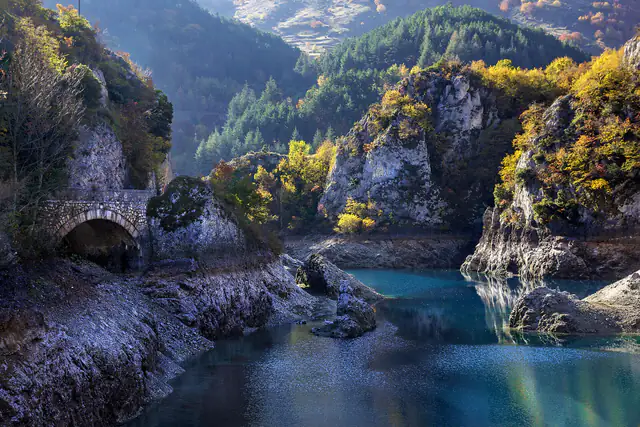
An emerald-green lake tucked between rock walls, with a stone bridge crossing it and, not far away, a cave where the saint of the snakes has been v…
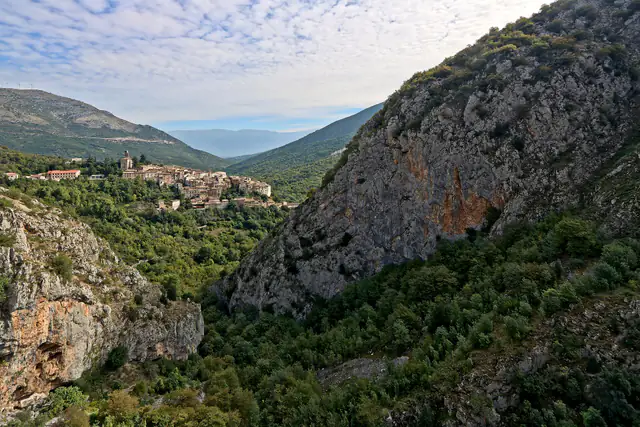
A stone village clinging to the side of a mountain, with houses held up by arches and, below, a green lake and a cave where the saint of the snakes…
Behind the altar, the saint in prayer from the early nineteenth century; at its base, a coloured stucco with flowers, birds and two angels holding a sun with the IHS monogram.
The saint's relics carried to the monastic complex.
The lake is green, the woods are fresh and there are few crowds: one of the loveliest months.
A little stone church with a two-light portico, looking out over the green water of the lake, and behind the altar the entrance to a cave: it is the cave where, according to tradition, a Benedictine monk lived as a hermit around the year One Thousand. Since then the place has never stopped being a pilgrimage destination.
The Hermitage of San Domenico (Eremo di San Domenico) is the place that gives the lake its name and the reason why Villalago is linked to snakes. You reach it on foot, visit it in a short time and remember it for a long time: for its position, for the paintings on the portico and for the stories the saint carries with him.
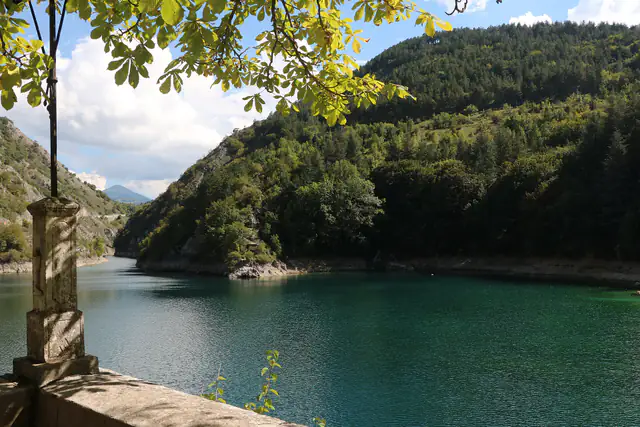
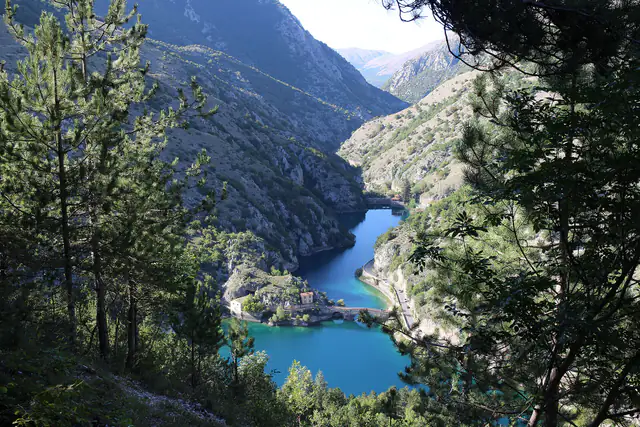
It stands on the shore of Lake San Domenico, in Villalago, in the Sagittario valley, in the province of L'Aquila. To reach it you cross the stone bridge over the lake: just after it, a small portico leads into the church. Around are rock walls and woods that come down to the water, and a few kilometres away the road climbs towards Scanno and its lake.
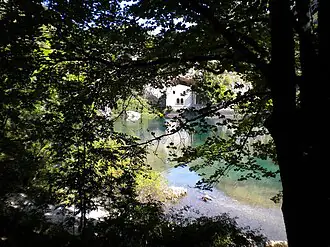
The yellow route follows the roads and links Hermitage of San Domenico to nearby places; the dotted line is the short connection from the road to the place.
Data: © OpenStreetMap contributors (ODbL) · Relief from AWS Terrain Tiles (SRTM, EU-DEM and other open sources).The saint we are talking about is Saint Dominic of Sora (Domenico di Sora), a Benedictine born in Foligno around 951 and died in Sora in 1031. In the Sagittario valley the sources attribute three foundations to him: the monastery of San Pietro del Lago, now vanished, the hermitage of Prato Cardoso and the church of Santa Maria in Flaterno.
When he arrived in the valley, the sources place it around the year One Thousand, with dates that change from one text to another. The account that stays the same is another: a monk chooses the solitude of a narrow valley, lives in a cave for a long period, at least six years according to some, and leaves a place that people continue to visit.
From the outside it is a small church. The little portico in front of the façade has a two-light window looking over the lake, and the portal is worked with motifs that the sources trace to Byzantine influences: one of them says it might come from the nearby monastery of San Pietro, the vanished one.
Inside, behind the altar, opens the entrance to the natural cave in which, according to tradition, the saint lived. Behind the altar there is also a statue of San Domenico in prayer, from the early nineteenth century, and at its base a coloured stucco altar frontal from 1761, with flowers, birds and two angels holding up a sun with the IHS monogram. One source also recalls a fresco of the Madonna and Child.
On the portico four miracles attributed to the saint are painted: the child fallen from the oak, the miracle of the beans, the child returned by the wolf and the fish of the greedy fishermen turned into snakes. It is the most talked-about part of the hermitage, because in a few images are the stories still handed down today.
On the age of the paintings the sources do not agree. Some consider them older; others say that what you see today is the work of a local twentieth-century artist, who would have replaced earlier frescoes that were lost. The subject, in any case, is that of the tradition.
San Domenico is invoked against snake bites, rabies and toothache. Tradition tells that he cured a girl bitten by a snake and that he tamed a wolf. In the nineteenth century his statue was carried in procession completely covered in snakes: a rite that was lost in Villalago and that continues today in Cocullo, with the festival of the serpari (the snake handlers).
From Villalago a path goes down to the lake and the hermitage. The sources describe it as very easy, about two kilometres, largely in shade; on the height difference there is no agreement, between a little over a hundred and almost two hundred metres, so it is best to count on a descent that becomes a climb on the way back. Going down, follow the signs for the hermitage; you need shoes suited to a well-trodden path.
Those who arrive by car can leave it along the SR 479, in the parking areas near the lake, and continue on foot from the bridge. A travel guide suggests about an hour and a half to see the lake and climb to the hermitage, with a few stops for photos.
Devotion to San Domenico is lived above all in Villalago. In January the fanoglie are lit, great ritual bonfires made of bundles of brushwood and beech trunks. On Easter Monday a procession carries the relics to the monastic complex, and in August a second procession goes through the village streets.
Great ritual bonfires in honour of the saint.
The saint's relics carried to the monastic complex.
A second procession in honour of the saint, through the village streets.
The hermitage is visited in a short time and leaves room for the rest of the day: the lake and its bridge are right there, a short way off are the Sagittario Gorges with their springs, and higher up the road climbs to Scanno and Lake Scanno.
It is a place that can be visited in every season, but the landscape around changes a lot. Spring brings fresh green and soft light; autumn lights up the woods on the shores; January has the fanoglie. Month by month, below you will find what to expect.
A small church, but with plenty to look at up close.
It leads into the church and offers an open view over the lake.
Worked with motifs that the sources trace to Byzantine influences: one of them says it might come from the vanished monastery of San Pietro.
Behind the altar, the saint in prayer from the early nineteenth century; at its base, a coloured stucco with flowers, birds and two angels holding a sun with the IHS monogram.
Behind the altar opens the entrance to the natural cave in which, according to tradition, the saint lived.
The stories told about the saint and his hermitage.
San Domenico protects against snake bites, rabies and toothache: in the nineteenth century his statue was carried in procession covered in snakes, a rite still seen today in Cocullo.
It is told that the saint cured a girl bitten by a snake: it is the story from which his fame as protector was born.
Tradition says the saint tamed a wolf; among the miracles painted on the portico is that of the child returned by a wolf.
Among the four miracles on the portico is that of the greedy fishermen, whose fish turn into snakes.
Best time: from May to June and from September to October. The bars show how well suited the month is: the taller, the better.
The great silence of winter and, in January, the fanoglie lit in honour of the saint.
Festivals and traditions Fanoglie of San Domenico
Still winter: short days and few people, suited to a short visit.
The thaw melts the snow on the slopes and green begins again on the shores.
Tender green and soft light: a good time to walk down from the village.
Festivals and traditions Easter Monday procession with the relics
The lake is green, the woods are fresh and there are few crowds: one of the loveliest months.
Long days and long light on the water: the path stays largely in shade.
The heat pushes you to look for the cool hours; the shaded path helps.
A month of heavy traffic towards Scanno: it is best to arrive early in the morning.
Festivals and traditions Procession of San Domenico through the village streets
Less traffic on the road and colours beginning to change: excellent for photography.
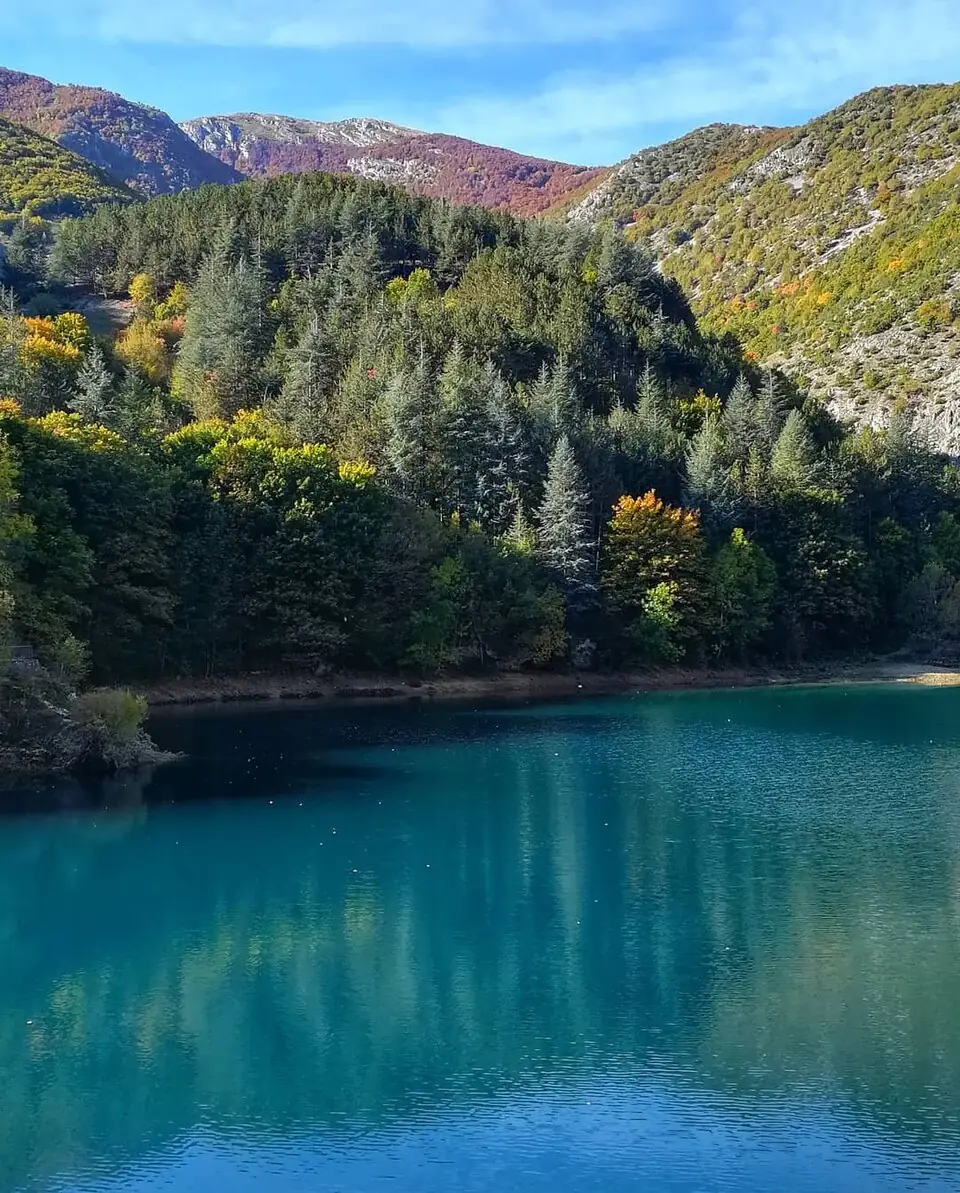
The woods on the shores light up and double their colours on the water.
Fallen leaves and short days: the place is quiet and the light is low.
Cold and short days: a quick visit.
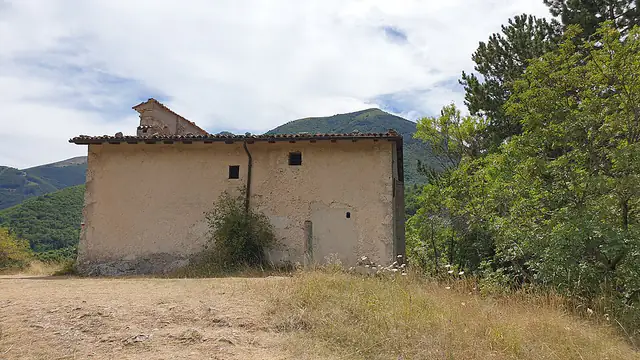
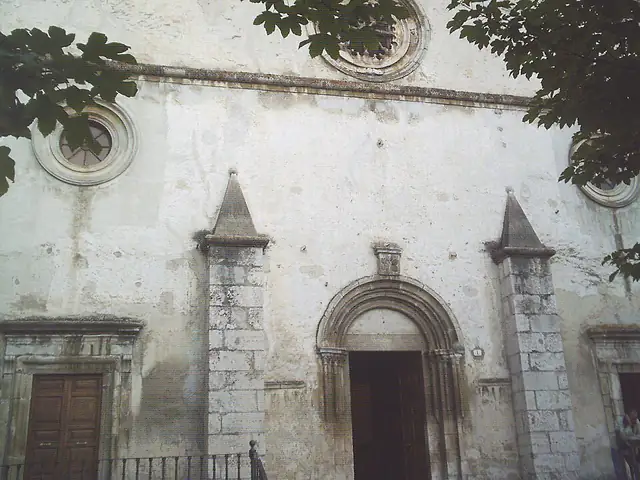
Postcards from the area, with the straight-line distance.
Fresh green and soft light: the walk down from Villalago is the loveliest way to arrive.
The woods light up on the shores and double their colours: the season most sought after by photographers.
Silence and short days, and in January the fanoglie of San Domenico.
It is a small stone church on the shore of Lake San Domenico, in Villalago, built next to the cave in which, according to tradition, the saint lived around the year One Thousand.
Read more: The monk who sought solitudeOn the shore of Lake San Domenico, in Villalago, in the Sagittario valley, in the province of L'Aquila: you arrive after the stone bridge that crosses the lake.
Read more: Where the Hermitage of San Domenico isA Benedictine monk born in Foligno around 951 and died in Sora in 1031, and tradition has him as a hermit in a cave in the Sagittario valley.
Read more: The monk who sought solitudeBecause tradition tells that he cured a girl bitten by a snake and protected people from venomous snakes: he is invoked against bites, rabies and toothache. Today the festival of the serpari is held in Cocullo.
Read more: The saint of the snakesA small church with a statue of the saint in prayer from the early nineteenth century, a coloured stucco altar frontal from 1761 and, behind the altar, the entrance to the natural cave.
Read more: A portico, a two-light window and a caveFour miracles of the saint: the child fallen from the oak, the miracle of the beans, the child returned by the wolf and the fish of the greedy fishermen turned into snakes.
Read more: The four miracles of the porticoFrom Villalago a very easy path of about two kilometres goes down to the lake and the hermitage, largely in shade; alternatively you leave the car along the SR 479 and continue on foot from the bridge.
Read more: On foot to the hermitageA visit is short: a travel guide suggests about an hour and a half to see the lake and the hermitage together, with a few stops for photos.
Read more: On foot to the hermitageIn January with the fanoglie, on Easter Monday with the procession of the relics and in August with the procession through the village streets.
Read more: The saint's festivalsMay, June, September and October are the loveliest months; in January the fanoglie are lit.
Read more: When to go, month by month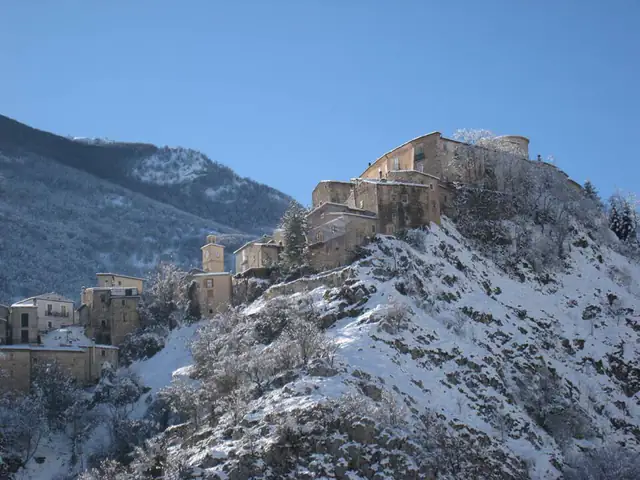
 3 km
 4 km
 5 km
 6 km
 6 km
 6 km