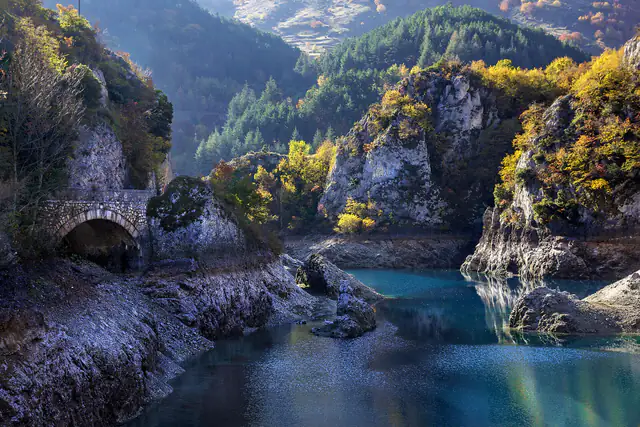
Sagittario Gorges
AbruzzoA nature reserve as long as the river that carved it: limestone rock, water running along the bottom and woods climbing to almost fifteen hundred m…

A medieval village at the mouth of a gorge, with a sixteenth-century church that kept a stolen triptych and, a little above, a village suspended on a hill that a great artist drew in 1930. Anversa degli Abruzzi is the northern gateway to the Sagittario Gorges.
A nature reserve as long as the river that carved it: limestone rock, water running along the bottom and woods climbing to almost fifteen hundred m…
A village perched on a hill like an eagle's nest, with a medieval tower above the houses and, every year at the beginning of May, a procession in w…
A church with a sixteenth-century portal and rose window, a national monument since the early twentieth century; it kept the Anversa Triptych.
A marked path of about three kilometres, with three hundred metres of climb: it takes about an hour.
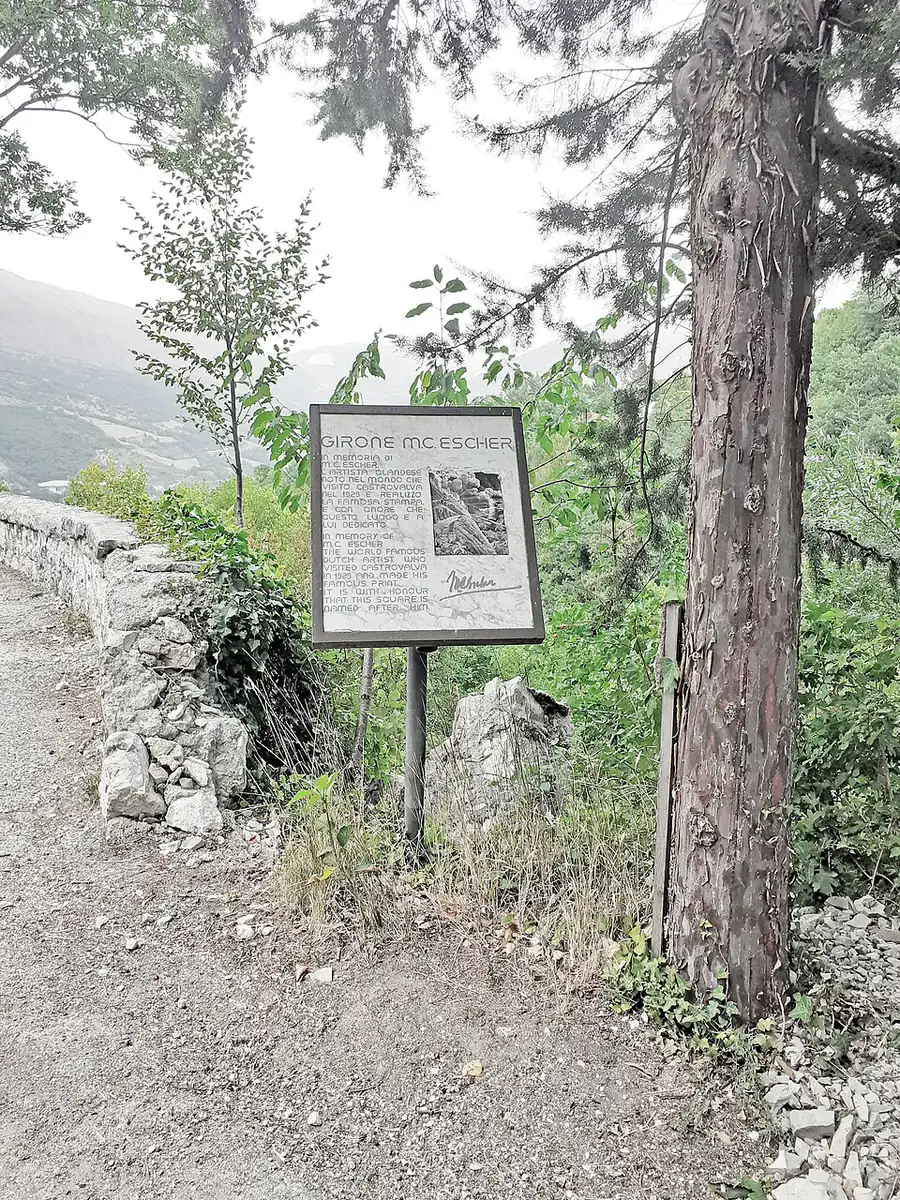
The bend in the road from which Escher drew Castrovalva, with a plaque reproducing the lithograph.
Full green, lively water and mild temperatures: one of the loveliest months.
A medieval village at the mouth of a gorge, with a sixteenth-century church that kept a stolen triptych and, a little above, a village suspended on a hill that a great artist drew in 1930. Anversa degli Abruzzi is the northern gateway to the Sagittario Gorges.
It stands at 560 metres, in the lower part of the Sagittario valley, and from here starts the road that climbs the gorges to Villalago and Scanno. But the village has a story of its own: a ruined castle, a church with a sixteenth-century portal and, above the town, Castrovalva, Escher's village.
Anversa degli Abruzzi lies in the Aquila area, in the province of L'Aquila, at the point where the river Sagittario leaves the gorges and the valley opens towards the Valle Peligna. It is the village from which you enter the nature reserve and from which you climb on foot to Castrovalva.
The yellow route follows the roads and links Anversa degli Abruzzi to nearby places; the dotted line is the short connection from the road to the place.
Data: © OpenStreetMap contributors (ODbL) · Relief from AWS Terrain Tiles (SRTM, EU-DEM and other open sources).Anversa is a small medieval village: the castle stands in the oldest part of the centre and the churches are found among the houses. Upstream, the limestone walls that the river has carved for centuries are those of the gorges.
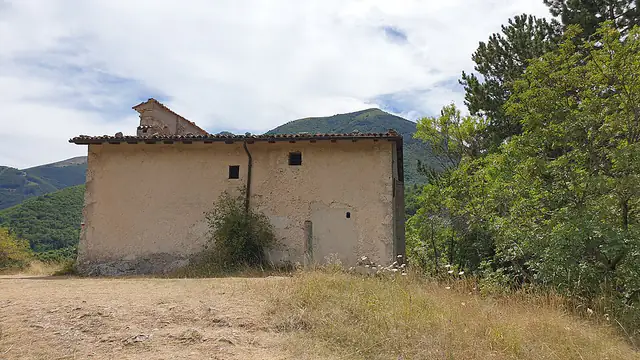
The castle is the historical landmark of the oldest centre, but today it is ruins, and the sources do not agree on name and history: some call it Norman, others speak of a noble family, one guide places it in the thirteenth century and one source recalls an eighteenth-century earthquake among the causes of its ruin.
Among the churches Santa Maria delle Grazie stands out, a national monument since the early twentieth century. The portal and the rose window are sixteenth-century. In the past it kept the Trittico di Anversa (Anversa Triptych), a sixteenth-century painting by an anonymous artist, stolen in 1981 and replaced by a copy.
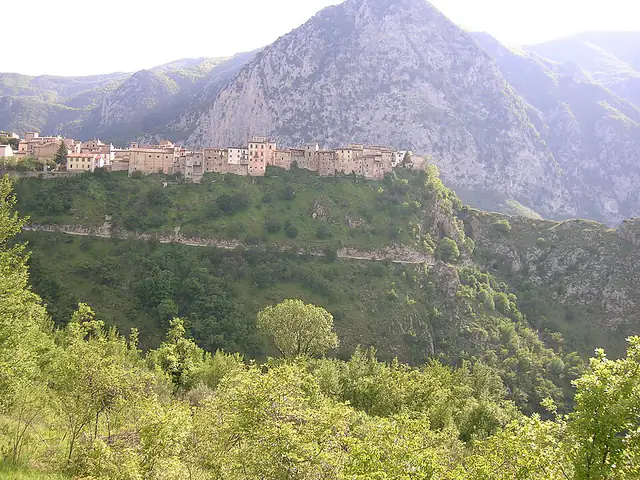
Above Anversa, clinging to a hill over the gorges, is Castrovalva, a fortified village that became famous thanks to Escher: the Dutch artist visited it in 1929 and the following year made a lithograph of it, in which Anversa too can be seen, low down in the valley. The spot from which he drew is a bend in the road, called Girone Escher, with a plaque reproducing the work.
In Castrovalva there is the sixteenth-century parish church of Santa Maria della Neve. You can also reach it on foot, from Anversa: a marked path of about three kilometres, with three hundred metres of climb, in about an hour; you find it among the routes of the Sagittario Gorges.
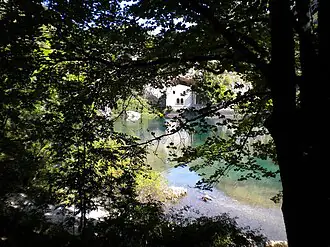
The Sagittario Gorges reserve begins here. A few minutes from the village are the Sorgenti del Cavuto, with the botanical garden, and the geological trail: routes, nature and seasons are in the article dedicated to the gorges.
The dam that creates Lake San Domenico has a story that passes through Anversa: the Sagittario's water, held back further upstream, feeds the hydroelectric power station that stands right here, and which gave the reason to build the lake in the twentieth century.
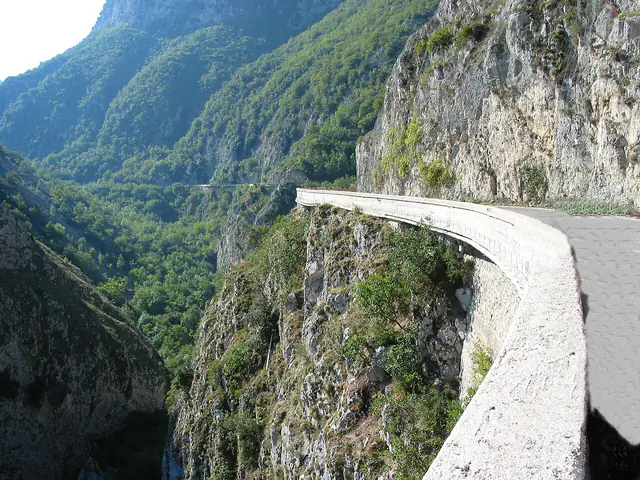
Upstream the SR 479 crosses the gorges and reaches Villalago, Lake San Domenico and then Scanno; downstream you descend into the Valle Peligna. In a day you can combine the village, Castrovalva and the first part of the gorges.
The village can be visited in every season, but the gorges and paths give their best in spring and autumn. May, June, September and October are the loveliest months, with October for the colours of the woods. Month by month, below you will find what to expect.
A village and the places around it, all reachable in a short time.
The ruins of the castle of the oldest centre: the sources do not agree on name and history.
A church with a sixteenth-century portal and rose window, a national monument: it kept the Anversa Triptych, stolen in 1981 and replaced by a copy.
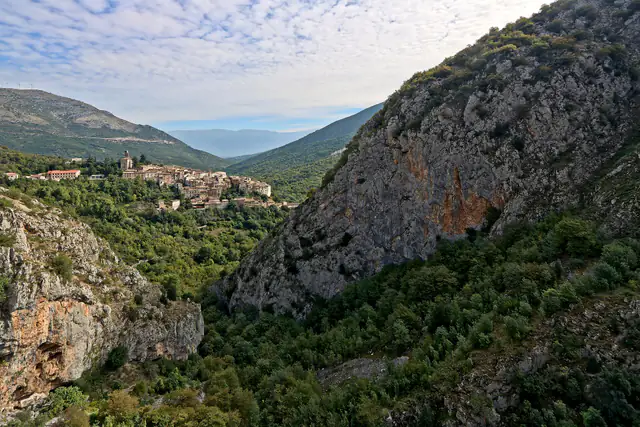
A marked path of about three kilometres, with three hundred metres of climb: it takes about an hour.
A bend in the road to Castrovalva, from which the artist drew the village in 1929: a plaque reproduces his lithograph.
Best time: from May to June and from September to October. The bars show how well suited the month is: the taller, the better.
With snow the landscape changes: find out about the condition of the road before setting out.
Still winter at altitude: short days and few people, suited to a short visit to the village.
The thaw swells the streams: the water is louder and the paths can still be damp.
Green returns to the gorges and the water flows abundantly: a good season for climbing to Castrovalva.
Full green, lively water and mild temperatures: one of the loveliest months.
The wood gives shade and the springs are cool: walking is pleasant.
Hot days: it is best to set out early and look for shade.
The busiest month towards the gorges: it is best to arrive early.
Fewer people and soft light: pleasant temperatures for walking and the first autumn colours.
The woods light up in orange and red: perfect light for photography.
Short days, an almost bare wood and silence: a short walk.
Cold and short days: it is usually best to choose something else.
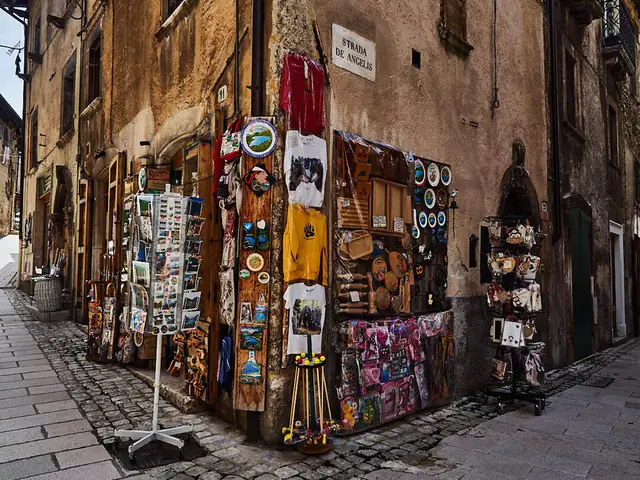
Postcards from the area, with the straight-line distance.
Green returns to the gorges and the water flows abundantly: a good time for the trails.
The woods light up along the gorge: the season most sought after by photographers.
In the lower part of the Sagittario valley, in the province of L'Aquila, at about 560 metres above sea level, at the point where the river leaves the gorges.
Read more: Where Anversa degli Abruzzi isThe ruined castle, the church of Santa Maria delle Grazie, Castrovalva with the Girone Escher and, a short walk away, the Sagittario Gorges.
Read more: The castle and the churchesA fortified village above Anversa, clinging to a hill over the gorges, famous because Escher drew it in 1929 and made a lithograph of it the following year.
Read more: Castrovalva and Escher's lithographIt is the bend in the road to Castrovalva from which the artist drew the village; a plaque reproduces his lithograph.
Read more: Castrovalva and Escher's lithographBy a marked path from Anversa, of about three kilometres and three hundred metres of climb: it takes about an hour.
Read more: Castrovalva and Escher's lithographA sixteenth-century painting by an anonymous artist, once kept in the church of Santa Maria delle Grazie, stolen in 1981 and replaced by a copy.
Read more: The castle and the churchesFrom Anversa: the reserve begins a few minutes from the village, with the Sorgenti del Cavuto and the botanical garden.
Read more: The Sagittario Gorges a short walk awayMay, June, September and October are the loveliest months, with October for the colours of the woods.
Read more: When to go, month by month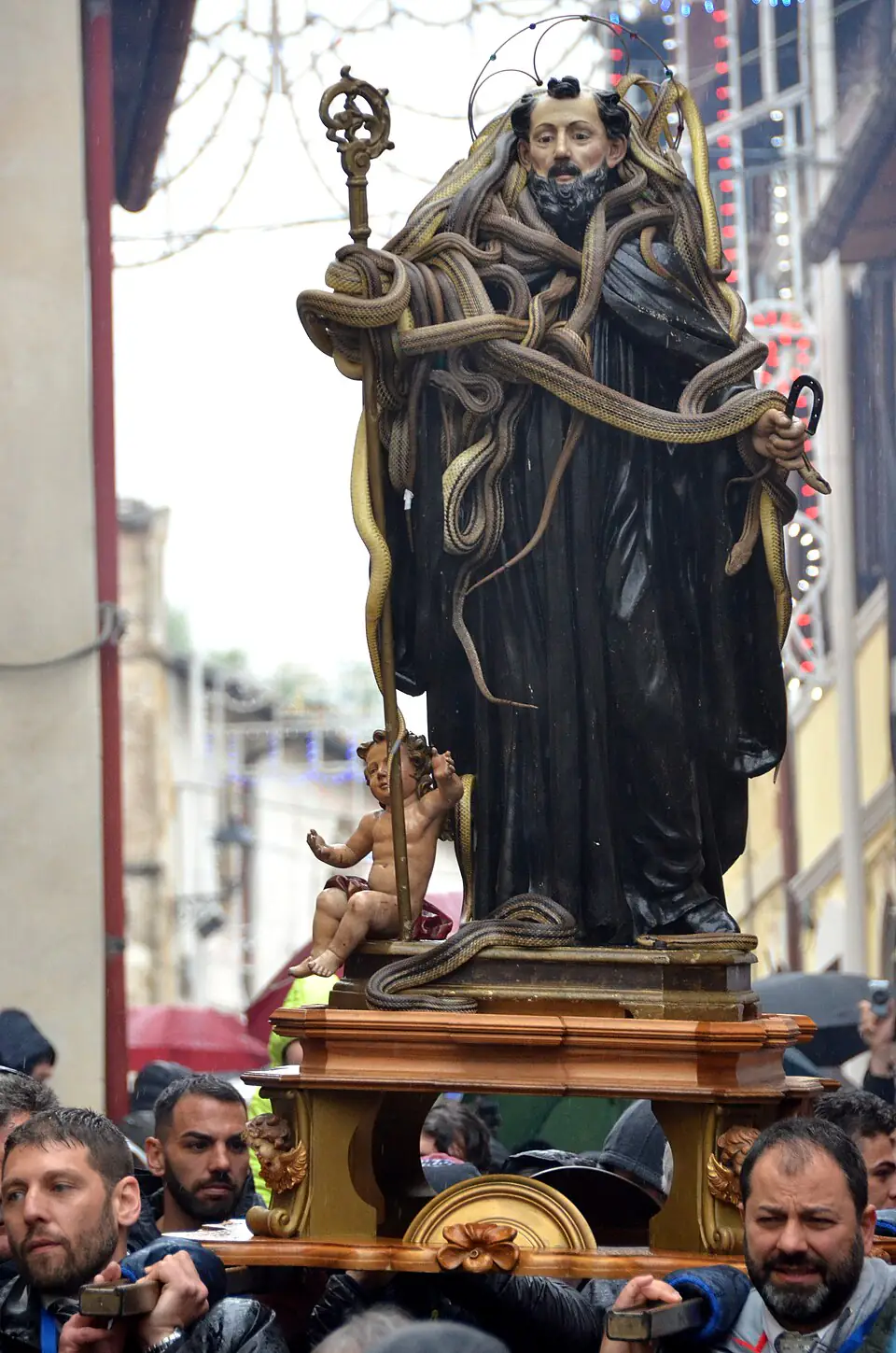
 6 km
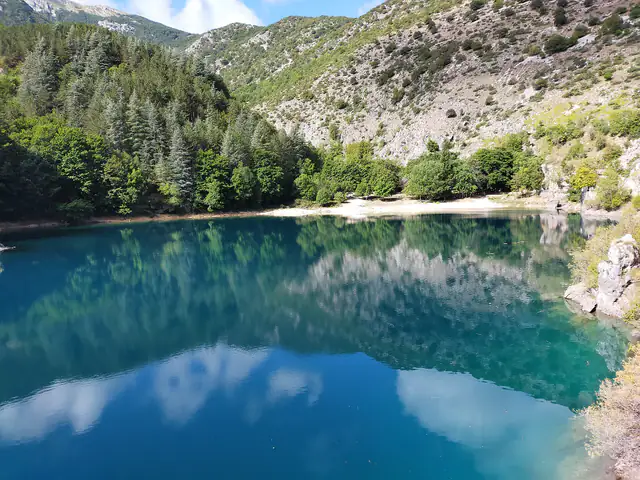 6 km
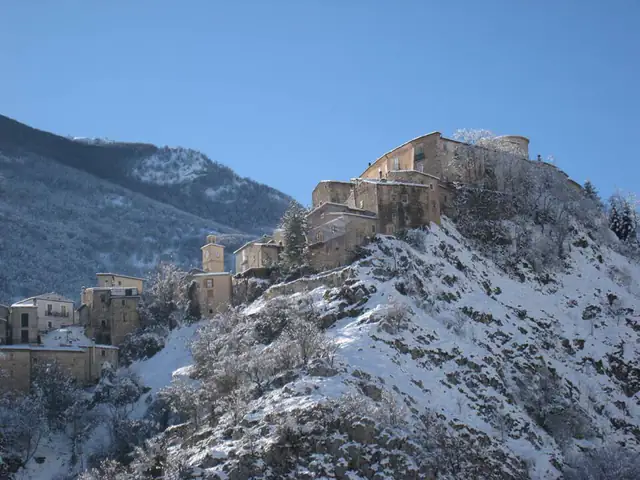 7 km
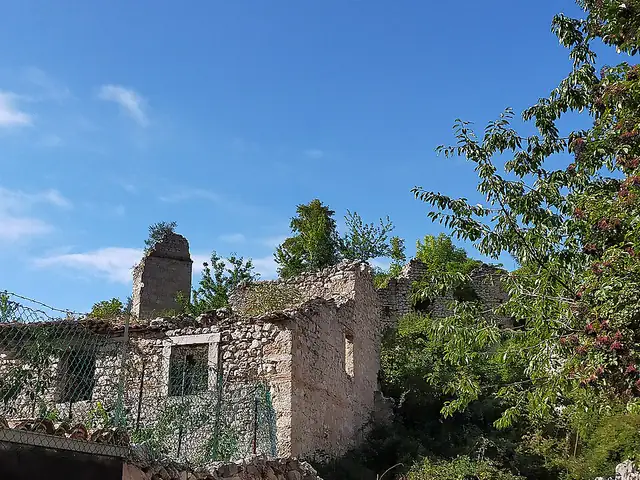 8 km
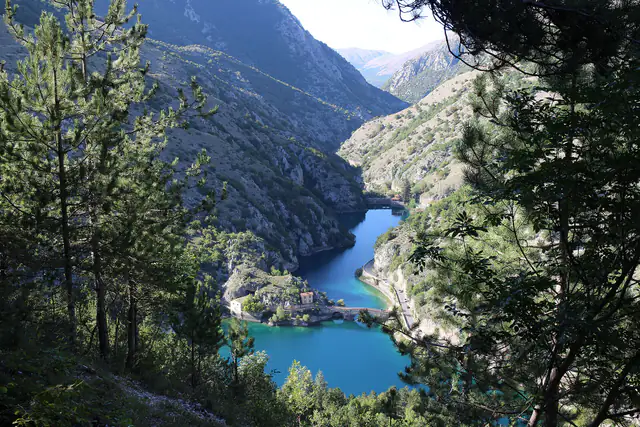 10 km
 11 km
 12 km