Scanno
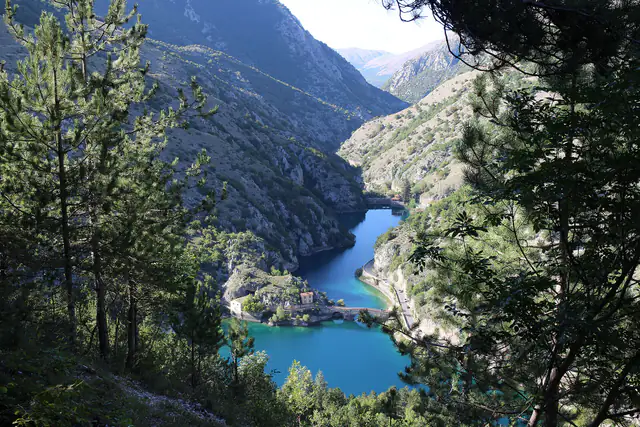
AbruzzoA stone village in the Sagittario valley, minutes from the lake that looks like a heart from above: shepherds, goldsmiths and alleys that turn into…

Original name: Santa Maria della Valle
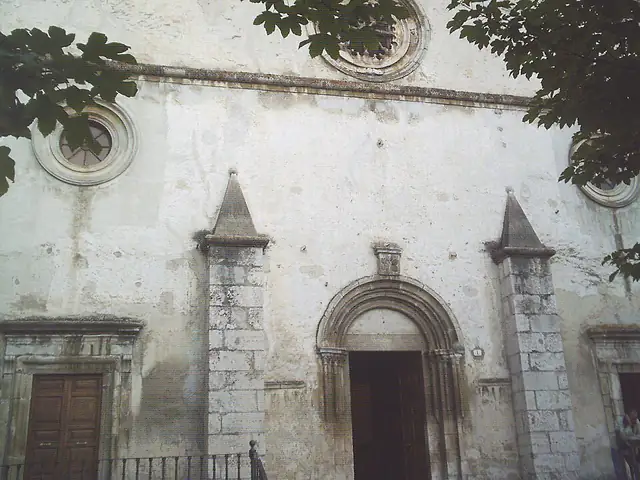
Scanno's mother church is a church of local stone, with a bell tower thirty-five metres high, a portal with carved doors showing two skulls and, inside, pillars older than the church itself and frescoes that the baroque stucco had covered, brought back to light at the end of the twentieth century.
A stone village in the Sagittario valley, minutes from the lake that looks like a heart from above: shepherds, goldsmiths and alleys that turn into…
A small country chapel on a hill at about a thousand metres, between the village and the lake, reached only on foot. From the hill you see Lake Sca…
Scanno's mother church, with a Burgundian portal from the twelfth-thirteenth centuries and frescoes on the pillars.
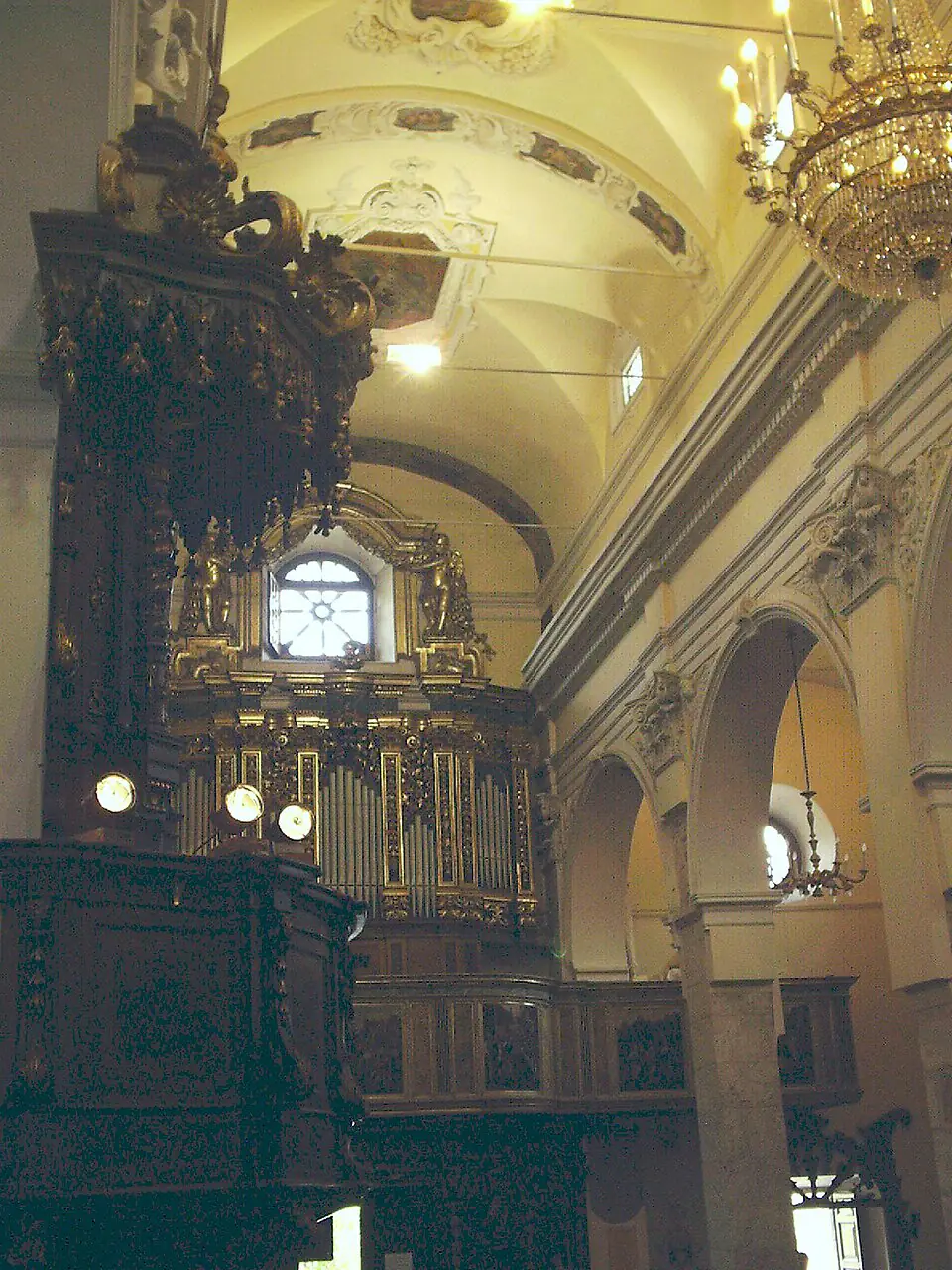
The balustrade has painted episodes of the life of Sant'Eustachio; the organ is in carved and decorated gilded wood.
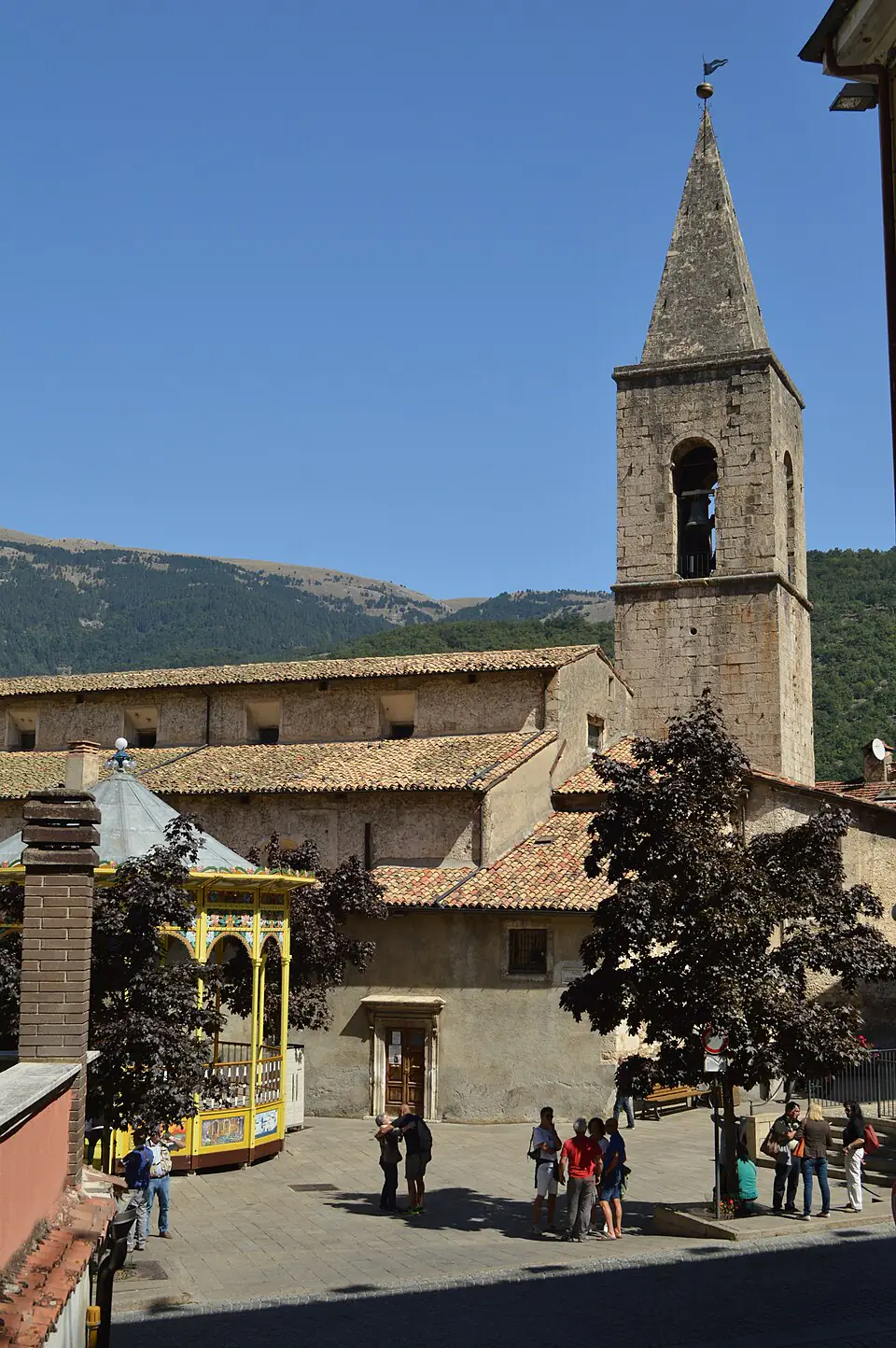
Thirty-five metres high, from the sixteenth century: it is the tallest of the village's churches.
The square is the centre of the village's festivals.
Scanno's mother church is a church of local stone, with a bell tower thirty-five metres high, a portal with carved doors showing two skulls and, inside, pillars older than the church itself and frescoes that the baroque stucco had covered, brought back to light at the end of the twentieth century.
Santa Maria della Valle, also called dell'Assunta, stands in the centre of Scanno. It is the village's main church and a good place to understand how its history has built up in layers: parts from the twelfth century, a sixteenth-century remodelling, baroque stucco and altars, restorations after every earthquake.
The church stands in the heart of Scanno, on a churchyard overlooking the square of Santa Maria della Valle. It is a natural stop on a walk through the old town.
The yellow route follows the roads and links Church of Santa Maria della Valle to nearby places; the dotted line is the short connection from the road to the place.
Data: © OpenStreetMap contributors (ODbL) · Relief from AWS Terrain Tiles (SRTM, EU-DEM and other open sources).The date of construction is not known, but some architectural elements show that a church already existed in the twelfth century: the pillars dividing the aisles are from the eleventh-twelfth century. In the sixteenth century, when it became Scanno's parish church, it was remodelled into its present forms, while partly respecting what was there before, such as the fifteenth-century frescoes on the pillars.
In the seventeenth century there was more major work, which renewed the stucco inside and made columns and pillars uniform; the eighteenth- and twentieth-century earthquakes required urgent restoration, and after the last great earthquake the church was reopened for worship. At the end of the twentieth century the heritage authority had the baroque stucco removed from the pillars and brought the Renaissance frescoes back to light.
The façade is simple, with a horizontal crown, a rose window at the centre and two smaller windows corresponding to the side aisles. The rose window has a frame with four seraph heads and is divided into eight trefoil arches; at the sides of the façade, two pillars with a pyramidal cusp were added as buttresses after the 1915 earthquake.
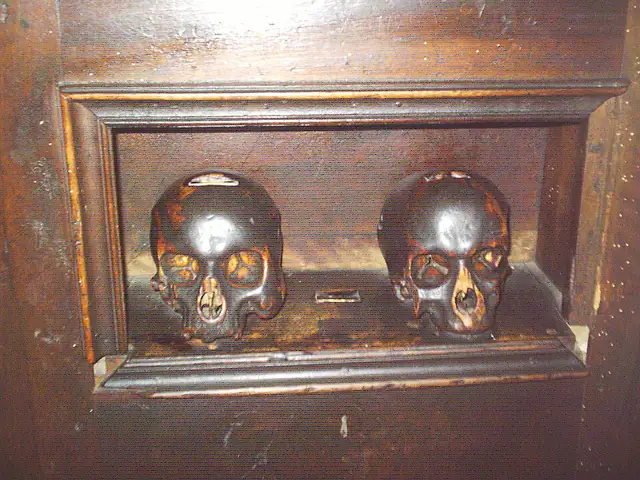
The central portal is the oldest part: carved, it shows on each door a high relief of two skulls, a “memento mori” for those who enter. It is of the Burgundian school, from the twelfth-thirteenth centuries, with a round arch. The two side doors were opened in the mid-seventeenth century.
The bell tower is thirty-five metres high, built in the sixteenth century, a square tower with a pyramidal cusp: it is the tallest of all the village's churches. It has four bells, remade several times over the centuries, and was restored after the eighteenth- and twentieth-century earthquakes and after a snowfall that had made the roofs collapse.
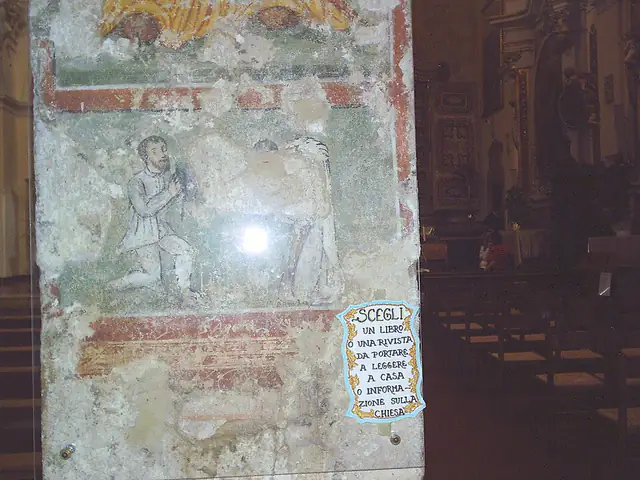
Inside the church has three aisles, divided by four quadrangular pillars and two columns, with lowered barrel vaults and a red terracotta floor. On the pillars frescoes of different periods have become visible again: a sixteenth-century Saint Agatha and a Saint Anthony the Abbot dated 1549, and next to them a Madonna and Child that by its style seems fifteenth-century.
The vault of the central nave has seventeenth-century paintings with Sant'Eustachio (Saint Eustace), the Virgin Mary and Saint Blaise, framed by stucco with scrolls, shells, cherubs and flower garlands.
The pulpit, in carved, gilded and inlaid walnut, is the work of Ferdinando Mosca of Pescocostanzo, the same artist as the four confessionals. The choir loft dates from between the end of the sixteenth and the early seventeenth century and on its balustrade are painted the episodes of the life of Sant'Eustachio, the village's patron saint. The organ is in carved and decorated gilded wood; the original pipes were taken away at the end of the eighteenth century and have been replaced by painted pipes.
The high altar is in polychrome marble, the work of the marble workers of Pescocostanzo and Alfedena to a design by Panfilo Rainaldi; the apse and choir are late eighteenth-century. Along the left aisle follow four minor altars, among them that of the Pietà, from the sixteenth century, with a wooden statue, and at the end of the aisle there is a sixteenth-century wooden baptismal font.
From the square you continue into the old town: the fountains, the palaces and Scanno's other churches, or go down towards Lake Scanno. In mid-August the square in front of the church is the place where, in the re-enactment of a wedding from another age, the quadrille is danced.
The church is a place of worship in use: visit it with respect and, for the details of the frescoes, a day of good light is best. Scanno's centre can be visited in every season; month by month, below you will find what to expect.
A church full of things to look at up close, outside and in.
The central portal, carved, is of the Burgundian school of the twelfth-thirteenth centuries: on each door two skulls, a “memento mori” for those who enter.
Thirty-five metres high, built in the sixteenth century: the tallest of the village's churches.
Saint Agatha, Saint Anthony the Abbot and a Madonna and Child: frescoes of different periods made visible again at the end of the twentieth century.
The balustrade has painted episodes of the life of Sant'Eustachio; the organ is in carved and decorated gilded wood.
Best time: from May to June and from August to October. The bars show how well suited the month is: the taller, the better.
Scanno's centre is quiet: a visit to the church and a walk through the alleys.
Short days and few people: the church can be visited without hurry.
Still winter at altitude: better a short visit to the centre.
Spring light helps in looking at the façade and the bell tower.
Festivals and traditions Good Friday procession
The old town is pleasant and there are few crowds.
Long days: the afternoon light renders the façade well.
The village comes alive: better to visit the church in the morning.
The square is the centre of the village's festivals.
Festivals and traditions Costumed re-enactment of a wedding from another age
Fewer crowds and soft light: excellent for seeing the centre without hurry.
Festivals and traditions Festival of the patron saint Sant'Eustachio
Autumn light warms the stone: the old town is at its best.
Short days and silence: a quiet visit.
The village prepares for the end-of-year festivities.
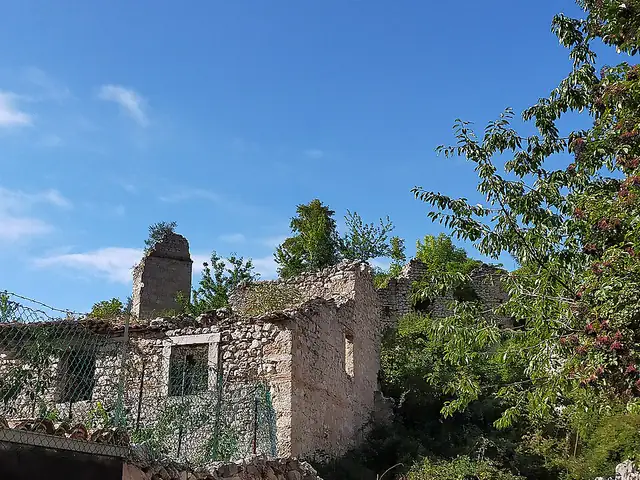
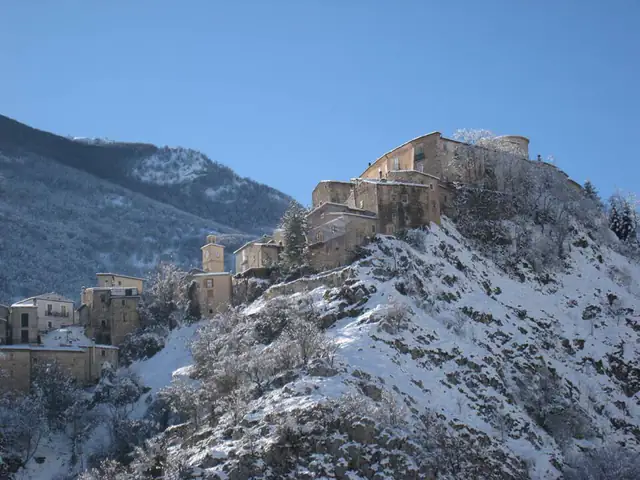
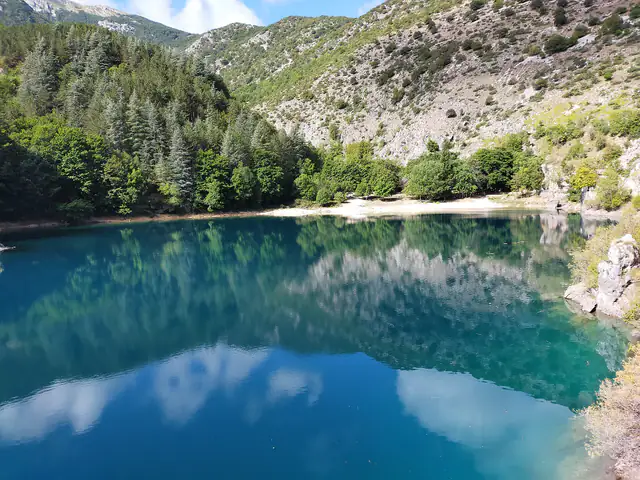
Postcards from the area, with the straight-line distance.
Soft light on the stone and few crowds: a lovely moment to look at the façade.
Autumn light warms the stone of the old town.
In the centre of Scanno, on a churchyard overlooking the square of Santa Maria della Valle: it is the village's mother church.
Read more: Where Santa Maria della Valle isThe date of construction is not known, but some elements, such as the pillars and the portal, date from the eleventh-thirteenth centuries; in the sixteenth century it was remodelled into its present forms.
Read more: An ancient church rebuilt in the sixteenth centuryIt is in Abruzzo Romanesque style, that is Romanesque in local stone, with sixteenth-century and baroque additions.
Read more: An ancient church rebuilt in the sixteenth centuryThe central portal is carved, of the Burgundian school of the twelfth-thirteenth centuries, and on each door has two skulls, a “memento mori” for those who enter.
Read more: The façade and the portal of the skullsThirty-five metres: built in the sixteenth century, it is the tallest of the village's churches.
Read more: The bell towerOn the pillars, a Saint Agatha, a Saint Anthony the Abbot dated 1549 and a fifteenth-century Madonna and Child, made visible again at the end of the twentieth century.
Read more: The interior: three aisles and frescoesFerdinando Mosca of Pescocostanzo, in carved, gilded and inlaid walnut; he is also the author of the four confessionals.
Read more: The pulpit, the choir and the organIn mid-August, in the costumed re-enactment of a wedding from another age, the quadrille is danced in the square.
Read more: After the churchIn every season, with a day of good light for the details of the frescoes; it is a place of worship in use, to be visited with respect.
Read more: When to go, month by month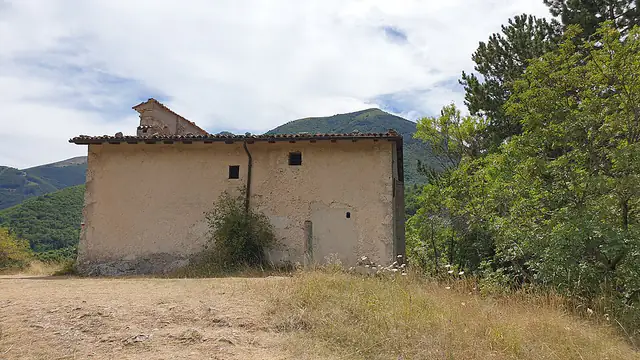
 2 km
 4 km
 5 km
 6 km
 6 km
 9 km