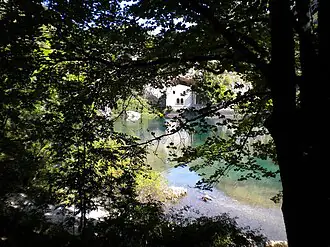
Hermitage of San Domenico
AbruzzoA little stone church with a two-light portico, looking out over the green water of the lake, and behind the altar the entrance to a cave: it is th…

Original name: Lago di San Domenico
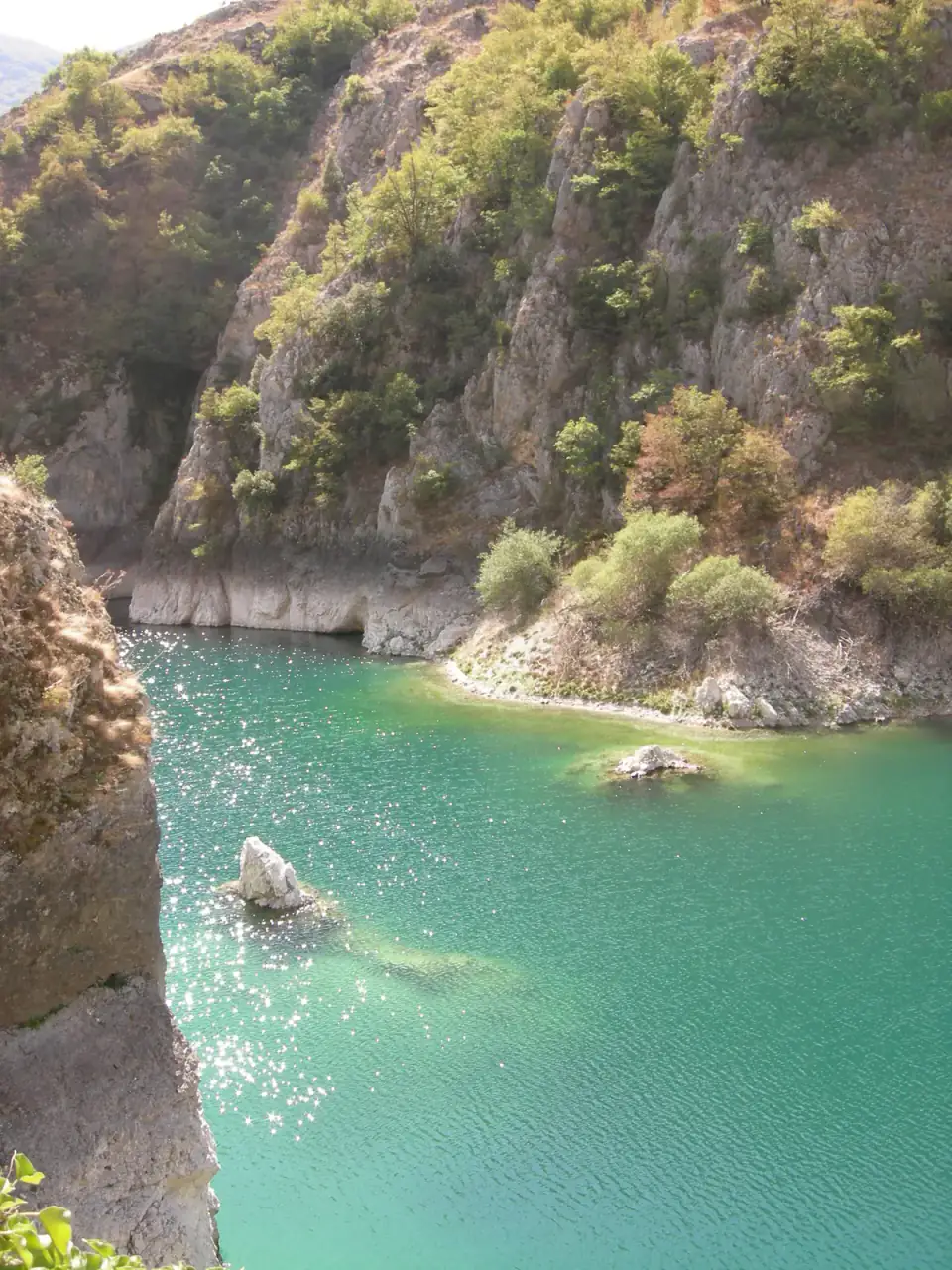
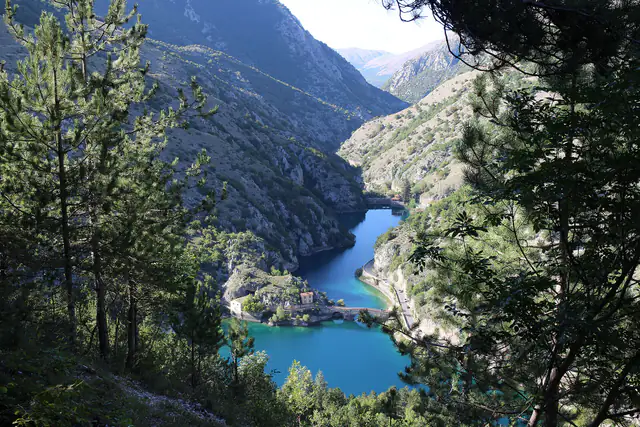
An emerald-green lake tucked between rock walls, with a stone bridge crossing it and, not far away, a cave where the saint of the snakes has been venerated for a thousand years. It is not a natural lake, but it takes little to forget it.
A little stone church with a two-light portico, looking out over the green water of the lake, and behind the altar the entrance to a cave: it is th…
A stone village clinging to the side of a mountain, with houses held up by arches and, below, a green lake and a cave where the saint of the snakes…
A cave in the rock, near the lake, where according to tradition the saint lived around the year One Thousand: a pilgrimage destination and a place of snakes.
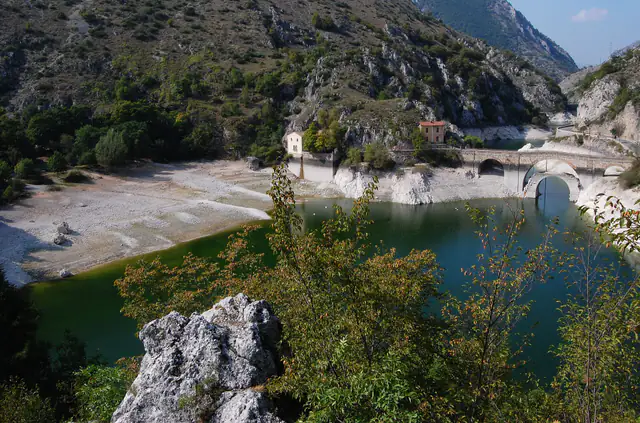
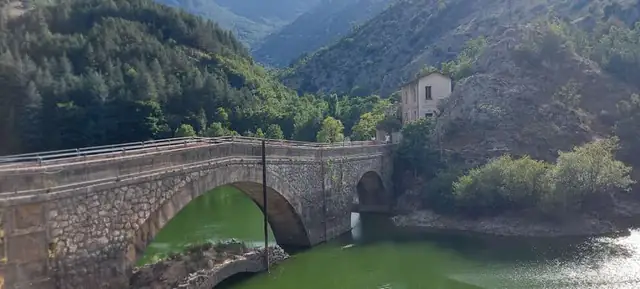
The most photographed spot on the lake: the arches change appearance with the water level and the light.
The saint's relics carried to the monastic complex.
The lake is green, the woods are fresh and there are few crowds: one of the loveliest months.
An emerald-green lake tucked between rock walls, with a stone bridge crossing it and, not far away, a cave where the saint of the snakes has been venerated for a thousand years. It is not a natural lake, but it takes little to forget it.
Lake San Domenico (Lago di San Domenico) is the stop many discover by chance, coming out of a bend in the road climbing to Scanno, and then never forget. It has colours that change with the light, it has pale shores that emerge when the water drops, it has a stone bridge that seems to have been put there forever. And then there is the history, made of a dam built a century ago and of a hermitage that Abruzzo people simply call “San Domenico”.
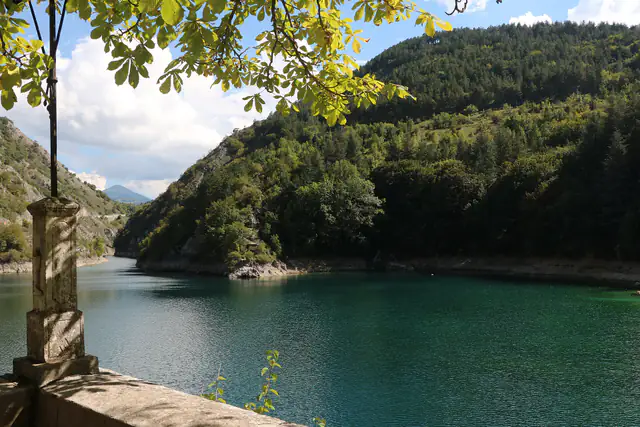
The lake lies in the Sagittario valley, in the province of L'Aquila, a step from Villalago and at the stretch where the river enters the Sagittario Gorges. The SR 479, the road to Scanno and Lake Scanno, passes right along its shore: that is why very many travellers see it without stopping, and they are wrong to. Around it rise limestone walls, with woods coming down to the water.
The yellow route follows the roads and links Lake San Domenico to nearby places; the dotted line is the short connection from the road to the place.
Data: © OpenStreetMap contributors (ODbL) · Relief from AWS Terrain Tiles (SRTM, EU-DEM and other open sources).The first thing to know is that the lake is not natural. It was created between 1920 and 1928 by damming the river Sagittario: the water was needed for a hydroelectric plant, the one at Anversa degli Abruzzi, and was also meant to serve the Rome-Pescara railway line. The Sagittario is both its main inflow and its outflow: it enters on one side and leaves on the other, and the water stays in the basin just long enough to reflect the slopes.
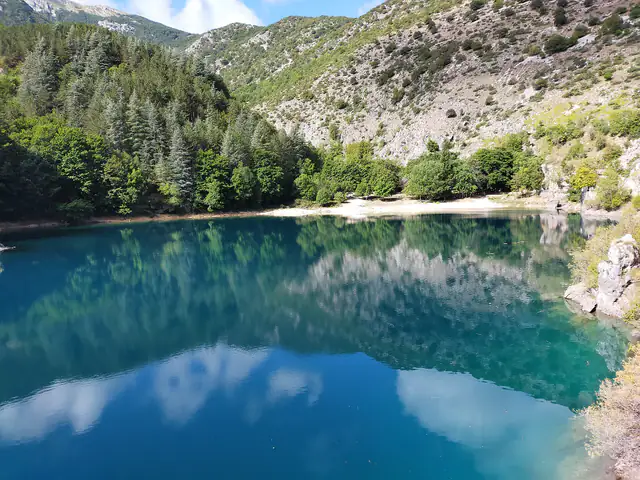
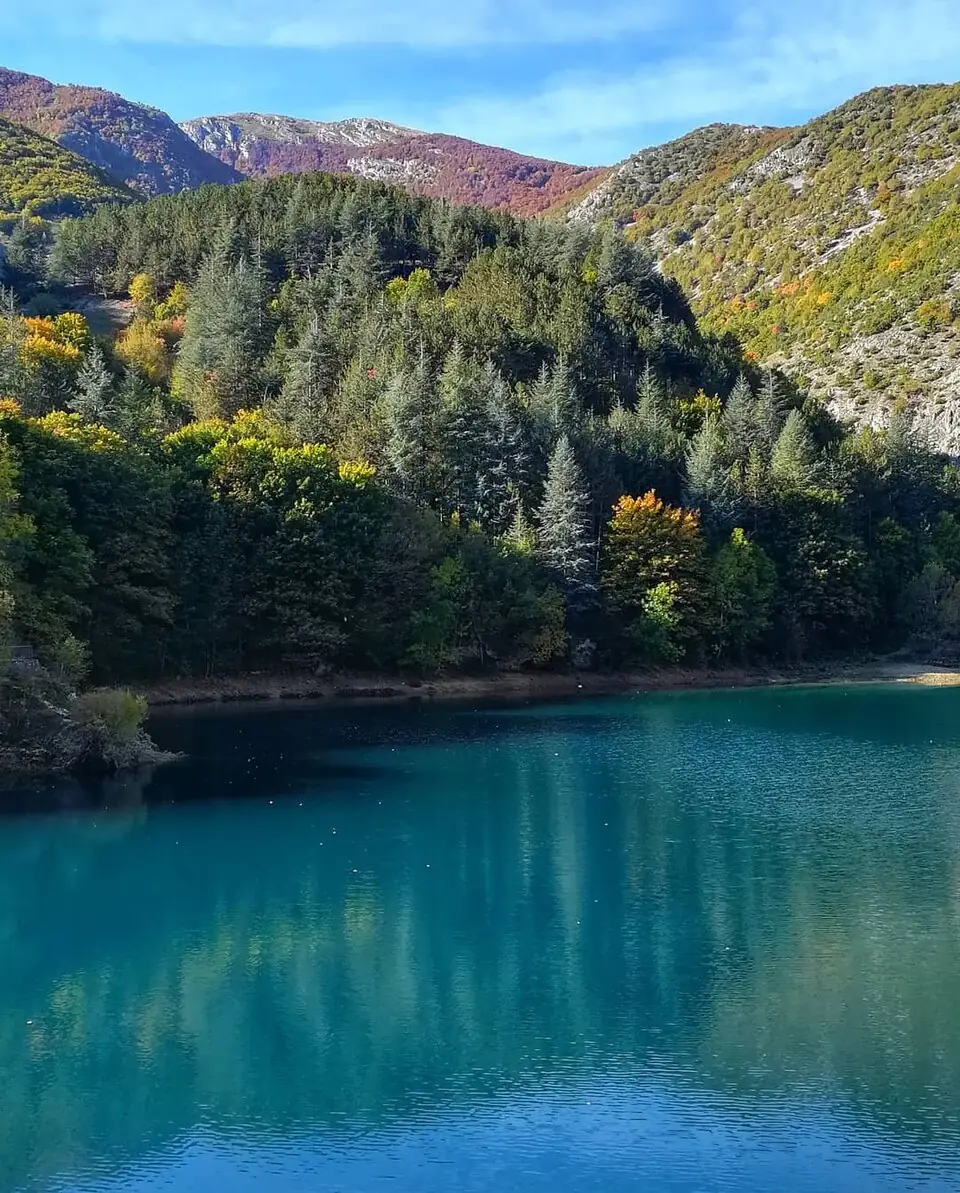
The result, a century later, is a lake that seems to have always been here. The colour, between green and turquoise, changes with the light and the sky; at some hours the surface is a mirror, at others it is ruffled by the wind.
The lake's symbol is the stone bridge: a multi-arched bridge that crosses it and behind which, on the shore, a small building can be glimpsed. It is the point where almost everyone stops to photograph. The water level changes through the year, and with it the landscape: when it drops, white, stony shores emerge, and sometimes even the lowest arches of the bridge are seen; when it rises, the lake becomes full and compact again, with the green of the woods a step from the water.
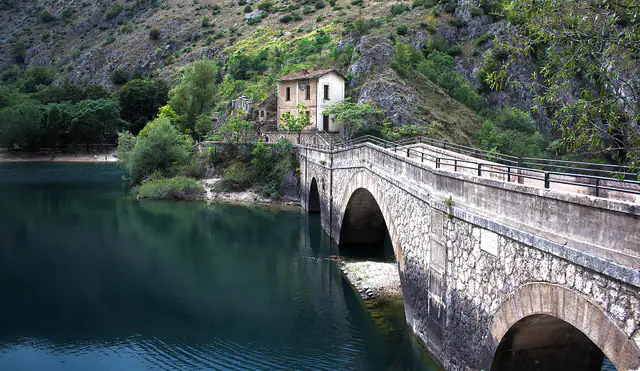
Not far from the lake, wedged into the rock, is the reason this place has its name: the Hermitage of San Domenico (Eremo di San Domenico), where according to tradition the saint, Saint Dominic of Sora, lived as a hermit around the year One Thousand. You arrive after the bridge, passing through a small portico with a two-light window over the lake; on the portico four of the saint's miracles are painted and behind the altar opens the entrance to the cave. Its story, the paintings and the path to reach it on foot are on the hermitage's page.
San Domenico is invoked against snake bites, rabies and toothache. In the nineteenth century his statue was carried in procession completely covered in snakes, a custom that in Villalago is now only a memory and that continues today in Cocullo, where the festival of the serpari (snake handlers) is celebrated every year. Scholars link it to a devotion born after the saint's death, when people believed he had protected them from the venomous snakes that infested the valley.
In Villalago the saint is celebrated with the fanoglie, great ritual bonfires: stacks of brushwood and beech trunks that are lit on the night in January, with a large communal fire in the main square. Other festivals linked to the saint are the Easter Monday procession, with the relics carried to the monastic complex, and the August procession through the village streets.
Great ritual bonfires in honour of the saint, in January.
The saint's relics carried to the monastic complex.
A second procession in honour of the saint, through the village streets.
The lake is easily walked: from Villalago a short stretch along the SR 479 is enough, with a few stops at the shores and the bridge, and a guide suggests about an hour and a half to see the lake and climb to the hermitage. It is a short walk, suited to anyone who walks with care and without hurry: remember that the road is not closed to traffic, so watch out on the bends.
The lake is the perfect stop on a day between the gorges and Scanno. A short way off are the Sagittario Gorges, with their springs and paths, and Villalago, the village where everything starts. Further upstream the road climbs to Lake Scanno and the village of Scanno; in the opposite direction, downstream, you reach Anversa degli Abruzzi.
The lake is beautiful all year round, but in different ways. Spring brings fresh green and soft light; summer, long light and a few stops in the cool hours; autumn lights up the woods on the shores and doubles the colours; winter, with snow on the walls, has an atmosphere of its own, silent. Month by month, below you will find what to expect.
The lake is small, but there is no shortage of things to do along its shore.
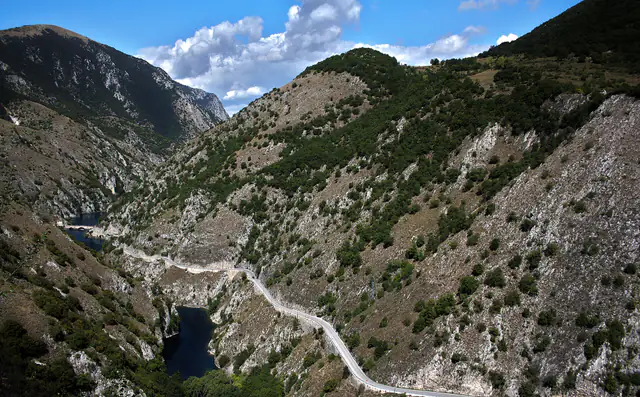
A short stretch along the SR 479 takes you from the village to the shore: with photo stops, and the climb to the hermitage, it takes about an hour and a half.
The most photographed spot on the lake: the arches change appearance with the water level and the light.
The morning light and the autumn light are the best: the green water is mirrored in the walls and the woods.
A cave in the rock with a frescoed portico: the saint's four miracles are painted on the walls.
The stories told about the saint and his lake.
San Domenico protects against snake bites, rabies and toothache: in the nineteenth century his statue was carried in procession covered in snakes, a rite still seen today in Cocullo.
Among the four miracles frescoed on the portico is that of the greedy fishermen, whose fish turn into snakes.
Another of the miracles painted on the portico: a child returned by a wolf.
Best time: from May to June and from September to October. The bars show how well suited the month is: the taller, the better.
Snow on the walls and great silence: a different lake, to be seen with attention to the road.
Festivals and traditions Fanoglie of San Domenico
Still winter: short days and few people, suited to a short stop.
The thaw melts the snow on the slopes and green begins again on the shores.
Tender green and soft light on the shores: a good time for a walk.
Festivals and traditions Easter Monday procession with the relics
The lake is green, the woods are fresh and there are few crowds: one of the loveliest months.
Long days and long light on the water: the ideal stop between one leg and the next.
The heat pushes you to look for the cool hours; the morning light remains the most beautiful.
A month of heavy traffic towards Scanno: it is best to stop early in the morning.
Festivals and traditions Procession of San Domenico through the village streets
Less traffic on the road and colours beginning to change: excellent for photography.
The woods on the shores light up and double their colours on the water.
Fallen leaves and short days: the lake is quiet and the light is low.
Cold and short days: a quick stop along the road.
Postcards from the area, with the straight-line distance.
Fresh green and soft light: a short walk between the bridge, the shores and the climb to the hermitage.
The woods light up on the shores and the lake doubles the colours: the season most sought after by photographers.
Snow on the walls and silence: a short stop, and in January the fanoglie of San Domenico.
No: it is an artificial lake, created by damming the river Sagittario with a dam built between 1920 and 1928, to feed a hydroelectric plant at Anversa degli Abruzzi.
Read more: A lake born from a damIn Villalago, in the Sagittario valley, in the province of L'Aquila, along the SR 479 that climbs towards Scanno.
Read more: Where Lake San Domenico isA hermitage carved into the rock near the lake: according to tradition the saint created it around the year One Thousand. On the portico four miracles are frescoed.
Read more: The Hermitage of San DomenicoThe saint is invoked against snake bites and tradition tells that he protected people from the valley's venomous snakes. In the nineteenth century the statue was carried in procession covered in snakes: today the festival of the serpari is held in Cocullo.
Read more: The saint of the snakesThey are great ritual bonfires in honour of San Domenico: the districts' fanoglie are lit in January and, the next day, the large one in the square.
Read more: The saint of the snakesYes, with a short stretch along the SR 479 from Villalago, with a few stops at the shores and the bridge. A guide suggests about an hour and a half, including the climb to the hermitage; watch out for traffic.
Read more: On foot around the lakeThe lake is a reservoir of a hydroelectric plant and the water enters and leaves with the Sagittario: through the year the level varies and the pale shores emerge when it drops.
Read more: The bridge, the shores and the seasons of the waterMay, June, September and October are the loveliest months, with October for the colours of the woods. In January you can see the fanoglie of San Domenico.
Read more: When to go, month by month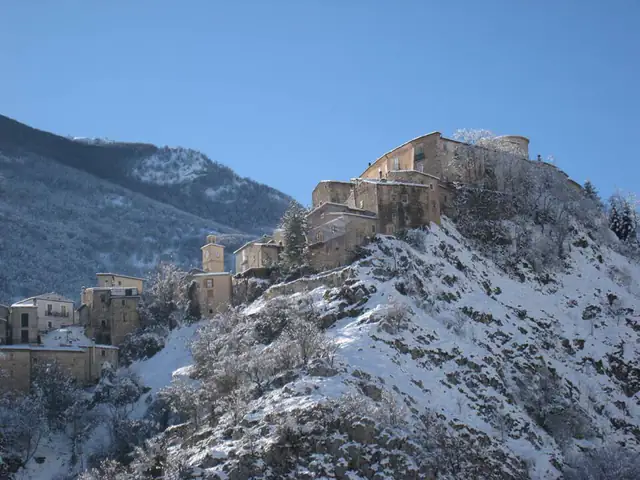
 3 km
 4 km
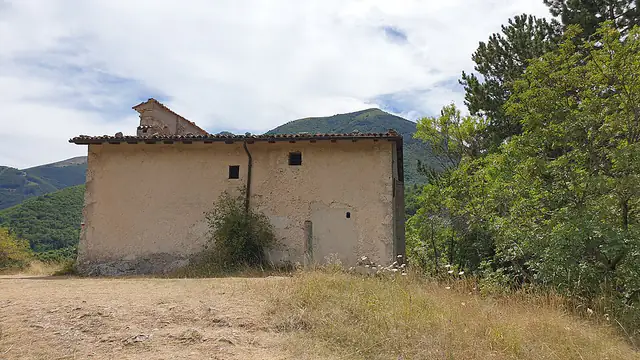 5 km
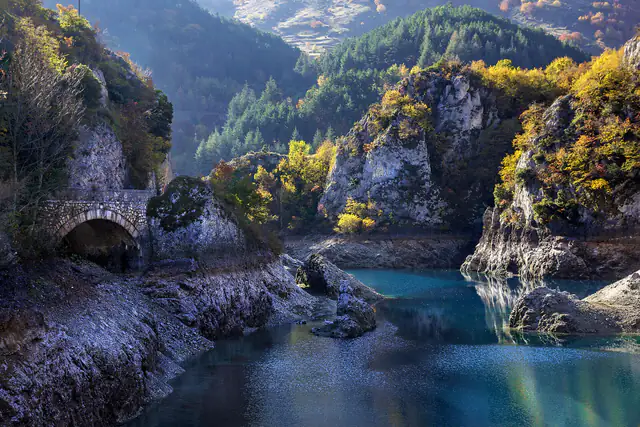 6 km
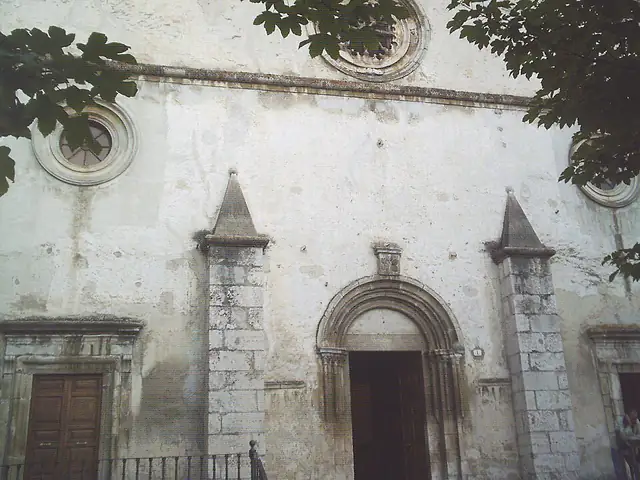 6 km
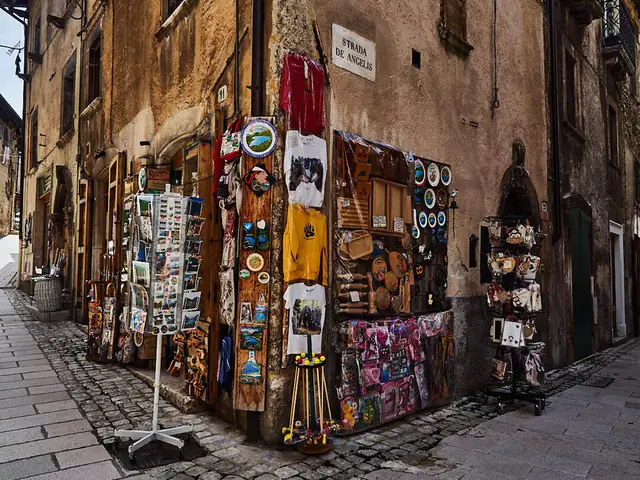 6 km